The role of biomass in the blue bioeconomy


Within the bioeconomy, there is growing attention to making better use of biomass. The B2BE Facilitator supports companies and farmers in developing products and applications based on natural resources. In recent years, various themes within this sector have been explored, including both plant-based and animal (side) streams.
So far, however, less focus has been placed on the marine sector and the blue bioeconomy. The B2BE Facilitator aims to change this, as significant opportunities also exist in the marine domain for the Flemish bioeconomy.
This furthermore aligns with the growing European awareness around the sustainable development of the blue economy. The recently launched European Ocean Pact (2026) highlights six priorities, including protecting and restoring ocean health and strengthening research, knowledge, skills and innovation within the blue economy.
Flemish blue (bio)economy
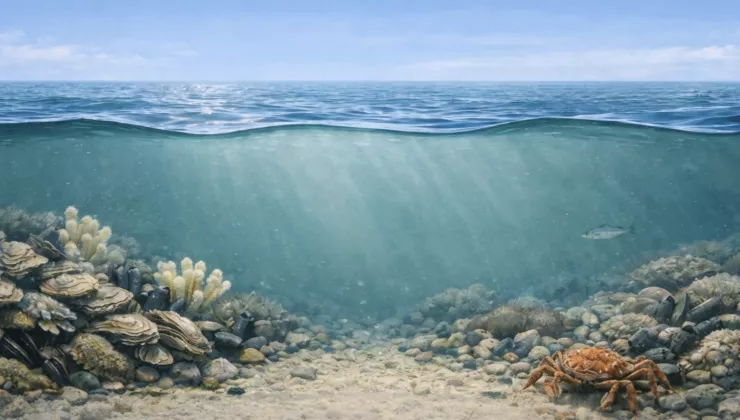
The Flemish blue economy is relatively small, yet the sea offers a wide range of natural resources with strong potential for producing high-value biobased materials. For example, valuable components from shellfish, such as chitin, can be used in applications like wound care or water filtration.
The marine sector also offers alternative systems for biomass production. Think of cultivating macroalgae in sea farms or microalgae in bioreactors. Both types contain valuable compounds that can be used in the food and health sectors.
At the same time, global demand is growing for biobased fishing nets and antifouling methods (techniques that prevent organisms from attaching to ships and installations). Because these applications must withstand harsh marine conditions, they are currently mainly made from fossil-based materials such as nylon, polyethylene, polypropylene and polyester.

The B2BE Facilitator will therefore also focus on alternative raw materials for the production of, among others, nets and antifouling coatings, based on biomass and residual streams from land or sea. In this way, it aims to contribute to a more biobased fisheries sector while helping to reduce the amount of maritime textiles ending up in the ocean.
Further research, awareness-raising and matchmaking will in any case be essential to engage all stakeholders in this innovative transition.
Flemish fisheries and aquaculture sector in figures
Innovation around biomass and biobased materials can also be relevant for the broader maritime sector. Looking for more background on the current state of the Flemish fisheries and aquaculture sector? Be sure to consult the latest Fisheries Report by the Agency for Agriculture and Sea Fisheries.
This report provides deeper insight into the economic, ecological and regulatory challenges faced by the Flemish fisheries sector. At the same time, it highlights clear opportunities in terms of technological innovation, sustainability and a stronger position within the food chain.
This article was originally published on the website of the B2BE Facilitator and has been slightly adapted for publication on this website. Read the original article (Dutch only).
Links with Blue Cluster
- Value Chain Facilitation Tool: instrument for identifying value chains based on aquatic biomass (within the scope of the BlueBioClusters project);
- PROBIO: project on the identification and characterisation of new bioactive materials for various applications;
- GAME: project on cultivation, extraction procedures and application in the nutraceutical and agrochemical industries;
- C-Shrimp: research into the production of shrimp, microalgae and microbial protein in a circular context;
- FResCo: research project with regard to biobased coatings;
- EnzyMares: development of a toolbox to easily identify promising enzymes for application in various industries;
- AlgaeValor: project on the conversion of residual flows from seaweed processing into valuable products;
- Seachem: educational project with early-stage researchers looking into the production and valorisation of seaweed biomass.