Living Coast
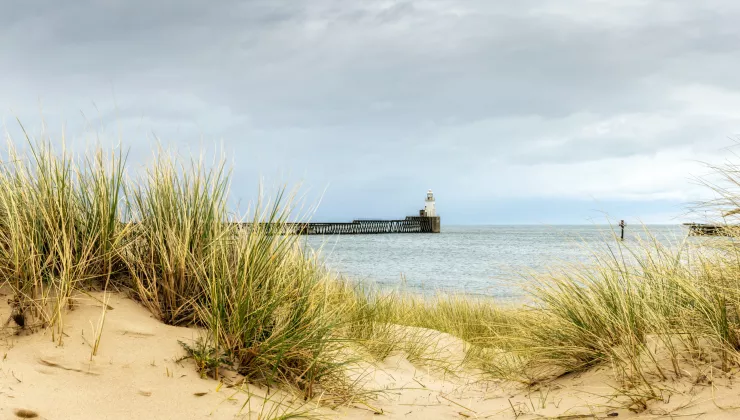
Dunes are our first line of defense against the power of the sea. To ensure they can continue to fulfill their role as natural protectors in the future, we need a better understanding of exactly how dune formation occurs. The Living Coast project therefore brings together models and data streams that collectively map the functioning of dunes and coastal systems. Specifically, this involves:
- Vegetation dynamics and dune formation
- Sand transport by wind and water
- Natural sediment supply from the sea
- Impact of waves and storms on coastal safety
Project objective
The Living Coast project will develop an operational module for each of these domains that enables simulations. A second, equally important objective is that these modules will not remain separate. An architecture will be developed within the project to link them into a single integrated digital replica. Over time, this replica can then be continuously fed with data from satellites, drones, and sensors. This will lay the foundation for a digital twin and allow us to begin testing scenarios for data-driven and adaptive coastal management, as well as near-real-time monitoring of coastal dynamics.
Goals
Living Coast aims to lay the foundation for a forward-looking approach to coastal management with a focus on nature-based solutions. The tools and models developed are designed for integration into the existing workflows of businesses and government agencies. In the medium term, the project supports the large-scale implementation of nature-based solutions, while in the long term it contributes to the development of an operational digital coastal twin. In addition, the project offers potential for international application to other sandy and urbanized coastal areas.
Partners: Ghent University (terrestrial ecology and coastal engineering), KU Leuven, VLIZ, Flanders Hydraulics
With the support of the Agentschap Innoveren en Ondernemen.
Contact: Kristien Veys