Marine Spatial Plan 2026–2034 approved by the Council of Ministers


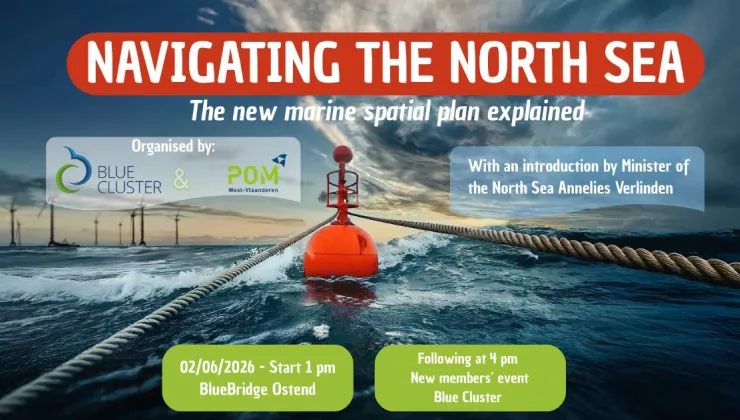
The Belgian federal government has approved the Marine Spatial Plan (MSP) 2026–2034. Developed under the leadership of Minister for the North Sea Annelies Verlinden, the plan provides a clear framework for the many activities taking place in one of the world’s most intensively used sea areas.
For Blue Cluster and POM West Flanders, the Marine Spatial Plan is a crucial policy instrument. From the very start of the revision process, both organisations have therefore advocated for sufficient space for innovation and economic development at sea.
Increased safety and clear arrangements at sea
The new plan provides for an expansion of existing anchorage areas and the designation of three research zones for maritime safety. These measures enhance shipping safety, respond to the increasing scale of vessels, and strengthen order at sea through clear spatial arrangements.
Research and innovation recognised, but space remains a point of attention
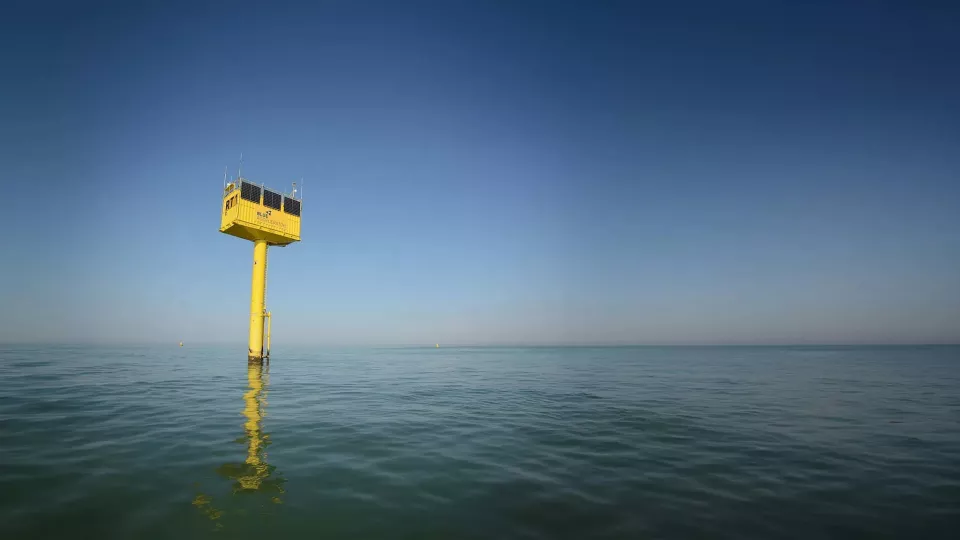
The MSP 2026–2034 explicitly creates room for scientific research, including through an additional offshore search zone, complementing the existing research zone near Ostend. Offshore wind farms are also designated as areas where scientific research is possible, offering opportunities for multi-use of space.
At the same time, Blue Cluster and POM West Flanders emphasise that explicit and sufficient space for innovation and economic development at sea remains essential. In their joint article “A plea for more space for innovation and economy in the North Sea” (29 January 2025), both organisations highlighted that zones for commercial and industrial activities had disappeared or been more restrictively defined in earlier plans, putting pressure on testing, demonstration and upscaling opportunities for innovative projects.
In this context, Blue Cluster and POM West Flanders continue to actively explore how new sustainable activities can once again be given explicit space, including by re-evaluating existing zones and uses and shaping them in a future-oriented way. Clearly defined test and innovation zones at sea remain a key lever to enable Flemish and European companies and knowledge institutions to develop, demonstrate and internationally valorise new technologies, including in the field of maritime security.
Multi-use of space as a driver for the blue economy
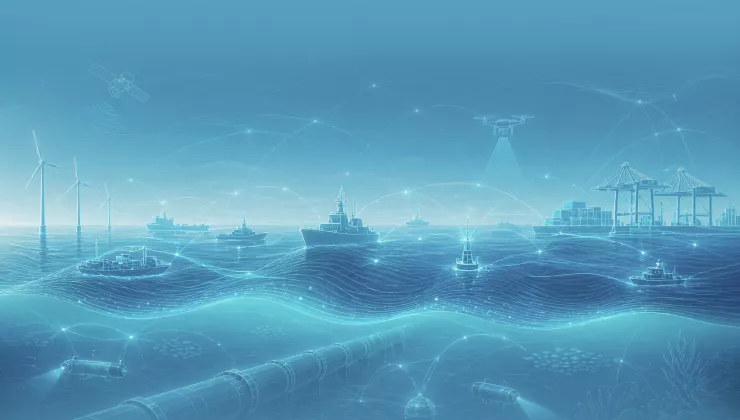
Blue Cluster and POM West Flanders continue to advocate for multi-use of space at sea. International studies show that combining activities such as energy production, research, nature development and innovative applications not only increases efficiency, but also generates expertise that can be deployed and exported internationally.
A shift towards ‘single-use’ zones, as proposed in earlier drafts of the plan, runs counter to this European and international trend. According to both organisations, the explicit designation of zones for multi-use remains the best guarantee for anchoring innovation at sea in a sustainable way.
Balancing coastal protection and economic opportunities
The approved plan introduces a six-mile coastal zone in which new fixed structures are excluded. This measure takes into account the concerns of coastal municipalities and protects the coastal landscape, recreation, shipping and coastal fisheries.
At the same time, Blue Cluster and POM West Flanders stress that nearshore zones are of great importance for innovation and the blue economy. These areas offer unique opportunities for testing, demonstration and upscaling of new technologies, thanks to their accessibility, proximity to ports and infrastructure, and lower operational thresholds. A refined and context-sensitive approach therefore remains essential to allow sustainable and innovative economic initiatives where this is ecologically and socially responsible.
Protecting biodiversity
Finally, the new Marine Spatial Plan strengthens the protection of marine nature. Three marine reserves and seabed integrity zones are designated, where fishing and other activities are restricted to support seabed recovery and biodiversity. In addition, a zone is предусмотрed where the environmental impact of fishing techniques will be studied.
Blue Cluster and POM West Flanders emphasise that innovation and the blue economy can also act as levers for a stronger marine ecosystem. New technologies and applications can contribute to nature restoration, monitoring and sustainable use of the sea, thereby connecting ecological and economic objectives.
Working together towards a future-oriented North Sea
Through debates, policy advice and cooperation with companies, knowledge institutions and public authorities, Blue Cluster and POM West Flanders continue to work towards a North Sea where economy, ecology and innovation go hand in hand.
The Marine Spatial Plan 2026–2034 represents an important step forward. However, continued dialogue and targeted adjustments remain necessary to further strengthen the Belgian North Sea as an international testbed for sustainable innovation and the blue economy.
Contact
Do you have any questions about the Marine Spatial Plan or its implications for innovation and economic activities at sea? Feel free to contact Marijn Rabaut (Blue Cluster) or Ira Lardinois (POM West Flanders). We are happy to discuss what this plan may mean in practice for your organisation.