Key takeaways from European Maritime Days 2026


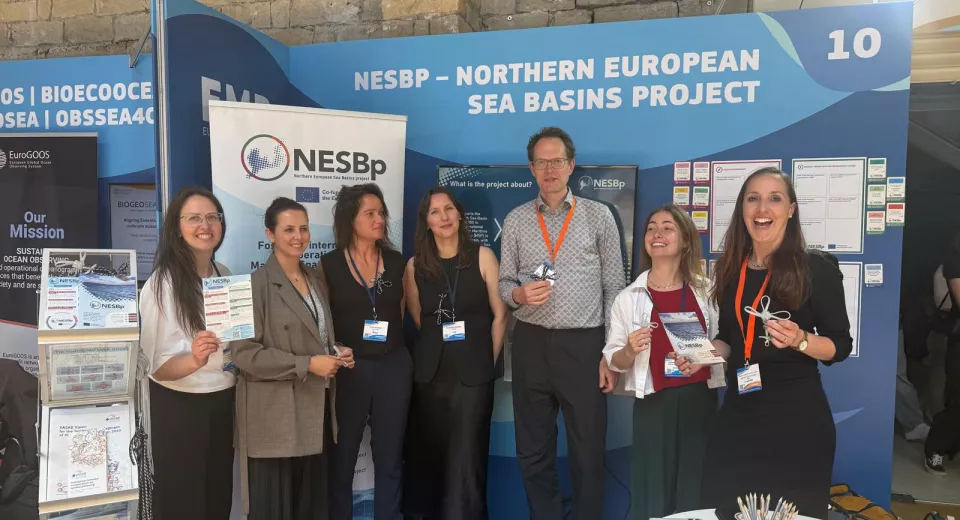
The European Maritime Days is the annual gathering for Europe’s maritime community: to network, to discuss, and to map out joint actions for a sustainable blue economy. As a Belgian innovation network, the Blue Cluster’s presence is indispensable. We are committed to maritime policy initiatives to ensure that maritime innovation, the multifunctional use of maritime space, and nature-based solutions are an integral part of future maritime policy frameworks. The Blue Cluster also aligns with European research programs aimed at restoring the health of the oceans and promoting a carbon-neutral, circular blue economy. During the conference, it represented five marine projects within EMFAF and the Mission Oceans and Water: Northern European Sea Basin project, EU4Ocean, CO-WATERS, BlueActionBanos, and EIT KIC Water. The Blue Cluster also provided input for both the Ocean Pact and the Ocean Act.
Key priority
The European Commission is responsible for organizing the European Maritime Days. European Commissioner for Fisheries and Oceans, Costas Kadis, was therefore invited to deliver the opening speech. He identified the key priorities for the future of Europe and its oceans. Various tools will be launched to achieve a stronger, better-coordinated policy. He referred to the EU Ocean Dashboard, which will monitor the progress of the 92 policy initiatives under the European Ocean Pact. The Ocean Act, which is set to follow later this year, is intended to translate this policy framework into concrete actions with clear timelines and accountability mechanisms. It should enable Europe to manage its seas more accurately, sustainably, and efficiently, and the importance of regional cooperation cannot be overstated.
Funding for a sustainable blue economy: oceans are also a priority
Improved funding is also on the agenda. Last year, the European Commission presented its proposal for the new Multiannual Financial Framework (MFF). Negotiations with the member states and the European Parliament are now in full swing. With a strong focus on defense and security, competitiveness and innovation, energy independence, climate and biodiversity, and migration and border control, the oceans are also being given a more prominent role. This should lead to concrete support mechanisms for the maritime sectors starting in 2028. “Europe has placed the ocean at the heart of its policy. We must now ensure that this political priority is translated into adequate financial commitments and concrete measures,” summarized Charlina Vitcheva, Director-General of DG Mare. Member States would be given greater autonomy within the MFF to establish national and regional partnerships based on local priorities.
A driving force in the maritime industry – ports are gaining importance as innovation hubs
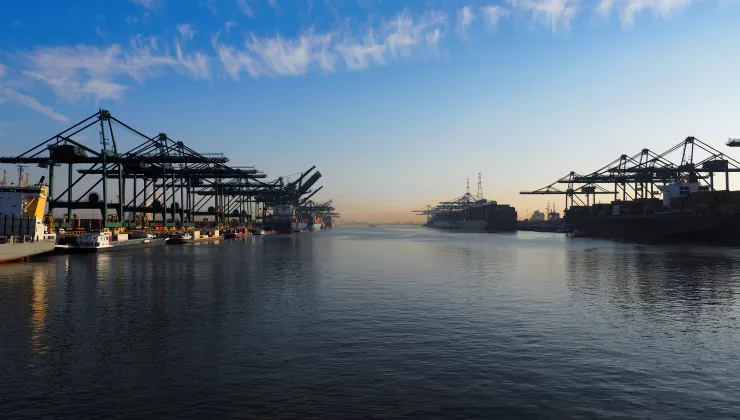
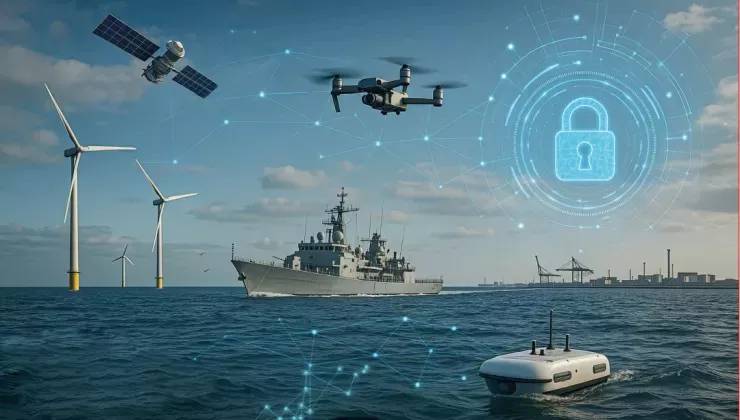
After all, Europe has much to gain from a sustainable blue economy. By transforming scientific excellence and innovative entrepreneurship into industrial capacity, we can take on a leading role. We already have strong research capabilities, innovative startups, and political support in this area, but we are struggling to scale them up into globally competitive industries. And this is not about trying to predict future technology trends, but about translating existing technologies—such as artificial intelligence, automation, and quantum technology—into practical, marketable products. Special attention was also given to the growing importance of protecting critical maritime infrastructure, such as ports, undersea cables, interconnectors, and offshore installations. Ports, incidentally, are increasingly positioning themselves as integrated industrial and energy ecosystems. At the same time, warnings were issued about the overregulation of shipping. Although everyone agrees on the need for decarbonization and the transition to cleaner fuels, shipping companies indicated that current green alternatives are too expensive and insufficiently available for large-scale application.
More cross-border thinking
Greater cooperation will be crucial in this regard. The participants emphasized that economic development in coastal and island regions must be balanced with environmental protection and social cohesion, requiring a holistic approach that interweaves governance, inclusivity, and long-term resilience. Success stories such as the recovery of the bluefin tuna stock demonstrate the value of such a combined approach involving science, regulation, and coordinated enforcement. The future resilience and competitiveness of a maritime Europe depend on deeper cooperation, integrated policies, technological progress, and collective action across all maritime sectors.
OceanEye: monitoring that goes beyond science
An example of such a collaborative initiative will be launched shortly. OceanEye will focus on improving policy and maritime knowledge by integrating ocean observations, maritime data, and digital applications into a more coordinated and efficient system. OceanEye is also intended to contribute to the global ocean observation system, based on the recognition that ocean-related challenges are inherently global. The European Commission plans to establish an international alliance in collaboration with UNESCO’s Intergovernmental Oceanographic Commission, bringing together EU member states, international partners, private-sector actors, and philanthropic institutions. The initiative also aims to strengthen public engagement by connecting science with art, education, and culture, in order to promote greater awareness of and responsibility for the oceans among citizens.