Green light for autonomous and sustainable inland navigation in Flanders


What for many years remained largely experimental now has a permanent place in Flemish inland navigation policy. Thanks to the recently approved decree on innovative and sustainable navigation, new technologies such as automated navigation, remote control and alternative propulsion systems can now be deployed structurally on Flemish inland waterways. This not only provides clarity for the sector, but also creates a solid basis to accelerate innovation and decarbonisation.
Legal certainty as a lever for innovation
For companies and research organisations in the maritime and logistics sector, legal certainty is crucial. The new decree provides that clarity. Investments in autonomous navigation systems, smart navigation, digital monitoring or alternative propulsion technologies are no longer held back by temporary or fragmented permitting frameworks. In doing so, Flanders positions itself explicitly as a region that not only tests innovation, but also dares to anchor it structurally.
According to Flemish Minister for Mobility, Public Works and Ports Annick De Ridder, the decree combines room for innovation with an unwavering focus on safety: every innovative vessel must demonstrate that it is at least as safe as a conventional ship.
Safety as an absolute condition
The transition from experimentation to structural deployment is not without conditions. Deviations from existing technical or crewing requirements are only possible if an equivalent level of safety is convincingly demonstrated. This assessment is carried out by an independent Commission of Experts, which also involves waterway authorities and port companies. This ensures that local infrastructure, navigation areas and operational realities are fully taken into account.
All approved deviations are recorded on a supplementary ship certificate, ensuring that monitoring and enforcement remain transparent and unambiguous.
Automation and sustainability reinforce each other
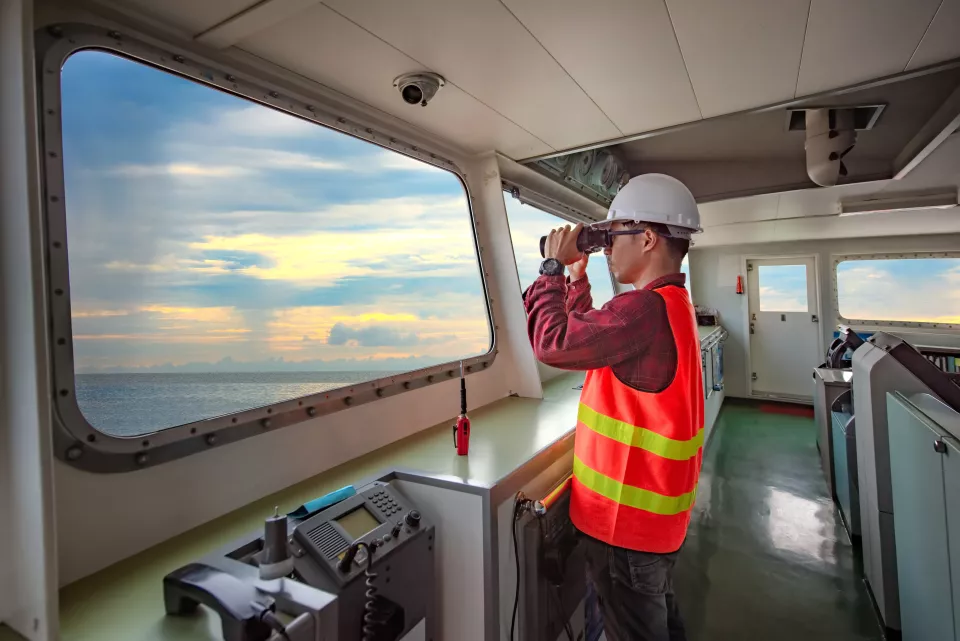
Notably, the new framework brings together several forms of innovation. It covers not only automated and remotely operated navigation, but also alternative propulsion systems such as electric or hydrogen-based solutions. This combination is no coincidence: smart, automated vessels make new propulsion technologies more feasible, while zero-emission propulsion aligns perfectly with more efficient and digital navigation.
For the blue economy, this represents a significant lever. Lower emissions, more efficient use of infrastructure and a stronger role for multimodal transport contribute to both economic growth and climate objectives.
Flanders as a European frontrunner
While European and international regulations still lag behind technological developments, Flanders has consciously chosen a pioneering role. By already putting in place a workable and safe framework, the region sends a clear signal to innovative players: Flanders aims to be both a test and implementation region for the inland navigation of the future.
This creates opportunities for Flemish companies and research institutions to scale up their solutions, collaborate across borders and help shape future European regulation.
From framework to impact
With this decree, an important precondition has been fulfilled, but the real impact will follow in the implementation phase. Close cooperation between governments, companies, ports and research institutions remains essential, as does continued attention to training and new skills, both on board and ashore. In that context, clusters and innovation networks play a key role in connecting policy ambitions with concrete technological and operational progress.
Building on collaboration and innovation
Blue Cluster has actively contributed to and supported the development of a structural framework for innovative and sustainable inland navigation. Over recent years, the cluster has brought together companies, knowledge institutions and public authorities to explore how automation, digitalisation and alternative propulsion can be deployed safely and effectively on inland waterways.
This engagement is reflected in projects such as DDSHIP and SSN, which focus on smart shipping technologies, decision-support systems and safe navigation concepts. Through these initiatives, Blue Cluster has helped lay the foundations to move beyond experimental pilots towards real-world implementation. The adoption of this regulatory framework is therefore a welcome step that aligns policy with technological progress and supports the transition towards autonomous and sustainable inland navigation in Flanders.