SABLE
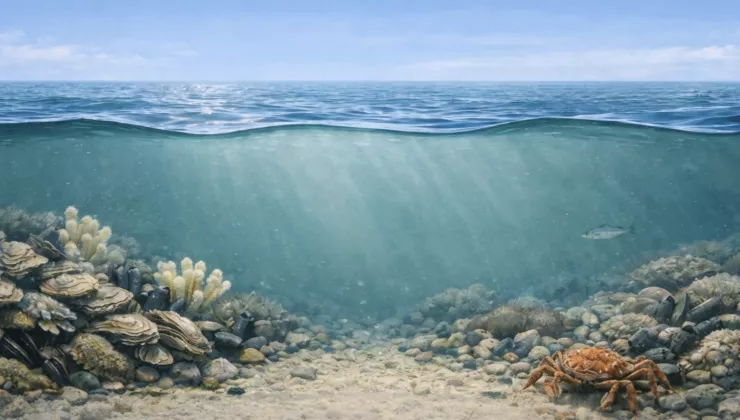
Tube worms such as Lanice and Sabellaria play an important ecological role in the North Sea. By forming reef-like structures on the seabed, they create shelter and habitat for fish, small crustaceans and other benthic species. This increases biodiversity. At the same time, they stabilise the seabed and help reduce erosion by trapping sediment.
Like oyster reefs and gravel beds, biogenic reefs are central to nature restoration plans in the Belgian part of the North Sea. However, knowledge about tube worms on soft sediments remains limited, especially beyond the intertidal zone.
SABLE (Sabellaria and Lanice Benthic Ecosystems) focuses on the subtidal zone, the part of the sea that is permanently submerged, and explores how tube worm habitats can be detected, stimulated, and potentially restored or created.
Objective of the project
SABLE starts from two key questions that are relevant for future applications.
- First, the project investigates whether multibeam echosounder (MBES) can be used to detect concentrations of tube worms. MBES is a widely used technique to map the seabed, for example in offshore works. If the technique can also identify suitable habitats, it can help companies better integrate nature restoration into their projects.
- In addition, the project partners explore whether local environmental conditions can be adapted to stimulate the growth of tube worms. This includes relatively simple interventions, such as adding stones or shell material, which influence currents and seabed structure.
Beyond the technical aspects, the project also assesses practical feasibility. This includes cost-benefit considerations, compatibility with existing maritime activities and scalability. The legal framework and permitting procedures for nature-inclusive interventions are also mapped.
Finally, the project evaluates whether the Westdiep project zone is suitable as a pilot location for future demonstration projects.
Impact and next steps
SABLE lays the foundation for future projects on tube worm-based nature restoration.
If MBES proves suitable, the technique can be used to develop a practical monitoring tool that automatically identifies where tube worm habitats are likely to occur. This can support offshore companies in applying nature-inclusive design.
If simple seabed interventions are effective, pilot projects can be set up to test this approach in practice. This opens the door to new applications in offshore infrastructure and nature restoration.
In parallel, the project develops concrete business cases around tube worm habitats. This creates new opportunities that combine ecological impact with economic value.
Partners: Mantis Consulting; Jan De Nul; Colruyt Group; ILVO; and Flanders Marine Institute.
With financial support from: VLAIO
Contact: Kristien Veys