DLC:X.X
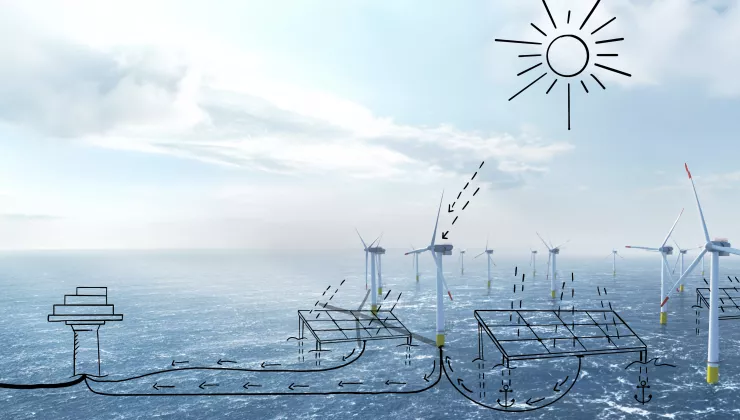
Offshore wind turbine support structures are typically designed with large safety margins due to uncertainties in loads, material behaviour and inspection possibilities.
Structural health monitoring (SHM), systems that continuously measure loads and structural condition, is increasingly used on operating turbines. It provides valuable insights into fatigue (wear over time) and remaining lifetime, but its potential to improve the design of new turbines is still largely untapped.
In addition, current design load cases (the standard set of scenarios used in turbine design) do not fully reflect real operational conditions. Grid constraints, curtailment, participation in reserve markets and dynamic power setpoints are only partially considered.
As a result, offshore structures are often over-engineered, leading to higher material use, higher costs and ultimately a higher levelised cost of energy (LCoE).
Objectives
DLC:X.X aims to make offshore wind support structures more cost-effective without compromising reliability. The project will:
- Develop a probabilistic design and fatigue life management framework that explicitly incorporates SHM data and active load control;
- Extend the design load case table to reflect future grid and market conditions, including varying power setpoints—both revenue-driven (“offensive”) and load-reducing (“defensive”);
- Validate these approaches through a real-world case study.
By combining probabilistic design, improved insight from structural health monitoring and smarter operational strategies, DLC:X.X reduces unnecessary conservatism in fatigue design. This leads to lighter support structures, lower costs and a more efficient rollout of offshore wind energy.
Partners: Vrije Universiteit Brussel, Ghent University and Aalborg University
Industrial Advisory Board: Otary RS NV, Elicio NV, JERA Nex BP, Jan De Nul NV, ENGIE Laborelec, 24SEA and Siemens Energy
With the support of: VLAIO
Contact: Stefaan Mensaert