Belgium's section of the North Sea more important than ever


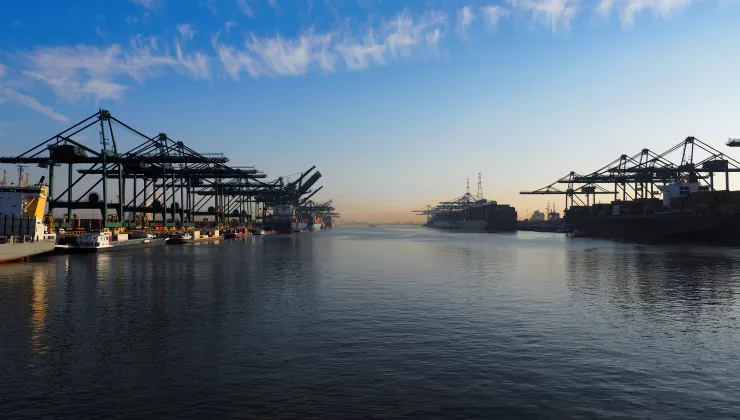
The new marine spatial plan marks a new phase for the Belgian North Sea, which is more important today than ever before. Against a backdrop of geopolitical tensions and the need for energy and food independence, the strategic importance of the Belgian sector of the North Sea is growing rapidly. Offshore energy production, the protection of critical infrastructure, and sustainable food supply all converge in one of the most intensively used marine areas in the world.
The North Sea: key to energy, economy and security
Annelies Verlinden, Minister of Justice and the North Sea: “The Belgian North Sea is one of the most heavily used maritime areas in the world. Through smart and multifunctional use of space, we are further building on our international leadership role in marine spatial planning. The Marine Spatial Plan 2026–2034 creates a clear and stable framework in which the economy and nature go hand in hand. By protecting space while also leaving room for innovation, we are strengthening support for the sustainable growth of the blue economy.”
Piet Opstaele, CEO of Blue Cluster: “The North Sea not only plays a crucial economic role in this regard but is also increasingly viewed from the perspective of maritime security and strategic autonomy. Subsea cables, energy connections, data networks, and offshore installations constitute critical infrastructure for our society and economy today. The protection and monitoring of this infrastructure are becoming increasingly important, especially now that European countries are committed to greater energy independence and enhanced resilience against hybrid threats.”
Jean de Bethune, Chair of POM West Flanders: “At the same time, renewable energy zones are emerging as a key area for innovation and economic activity. New developments such as energy islands, additional wind farms, multifunctional land use, aquaculture, and maritime defense applications are ensuring that the North Sea is becoming, more than ever, an economic engine for Belgium and Europe. This also offers significant opportunities in terms of technology and employment for Flemish ports, research institutions, and businesses.”
The Marine Spatial Plan (MRP) serves as the essential framework for balancing these various functions and developing them in a targeted manner. The plan specifies where and how activities such as energy production, nature conservation, food production, shipping, and innovation can take place over the next eight years.
Innovation and multi-purpose use take center stage
For Blue Cluster and POM West Flanders, the MRP is a crucial lever for accelerating innovation at sea. A future-oriented North Sea explicitly calls for space for new applications and for multiple uses of space, namely through the smart combination of activities. It is precisely this combination that makes the Belgian North Sea an international development area for the blue economy.
In addition, new opportunities are emerging for offshore applications in combination with emerging technologies such as offshore solar panels, floating infrastructure, and test zones for innovative systems.
Working together to build a future-oriented North Sea
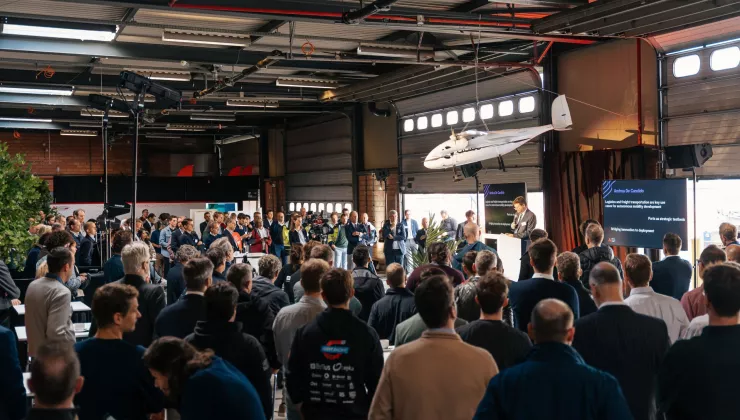
During the event in Ostend, companies, research institutions, and government agencies pooled their insights and engaged in a dialogue about the future of the North Sea. Minister Verlinden’s presence underscored the importance of collaboration between policymakers and the private sector to realize the ambitions of the Marine Spatial Plan.
The message is clear: Belgium is ready to further strengthen its role as a pioneer in the sustainable blue economy in the North Sea. Innovation, collaboration, sustainable energy, maritime safety, and multiple land-use are the keys to success in this regard.
For businesses, the new MRP represents a significant step toward a future-oriented blue economy, in which space for economic activities, energy development, and nature conservation go hand in hand, and in which strategic investments in maritime safety remain crucial.